
Plan
Stay
Move & explore
North Bengal's monasteries sit exactly where the communities that built them still pray, on ridgelines that took generations to settle. This circuit follows that thread from Darjeeling's Ghum Monastery through Takdah's colonial-era stillness to Kalimpong's Durpin Dara, Manjushree, and Pedong's frontier monasteries — a slower, more reflective read of the hills than
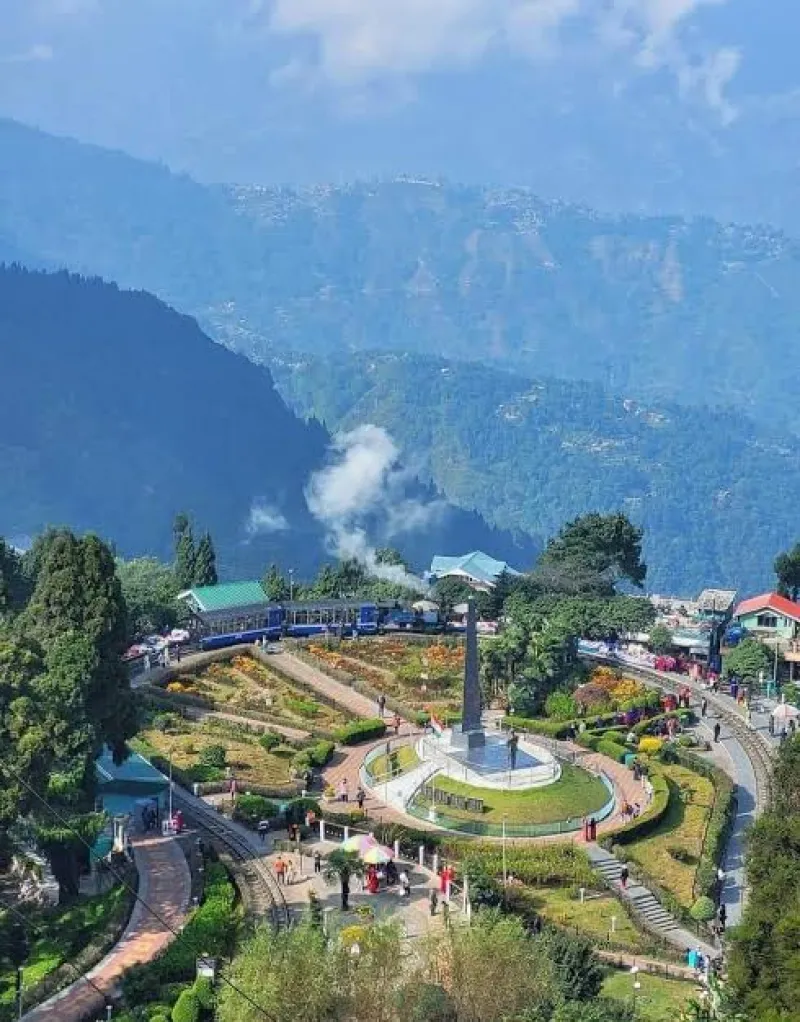
Places to Visit: Ghum Monastery, Batasia Loop, Mall Road. The trail opens at one of its oldest stops—Ghum Monastery, its prayer wheels worn smooth by generations of hands. Visit the Batasia Loop war memorial, then settle into your Darjeeling homestay and spend the evening on Mall Road before tomorrow’s move towards Takdah.
Places to Visit: Takdah Cantonment, Orchid Centre, Colonial bungalow walk. A short, scenic drive brings you to Takdah, where a cluster of century-old British bungalows—some now heritage homestays—sit quietly among orchid nurseries and pine cover. Walk through the Takdah Cantonment and the Orchid Centre, then settle into a heritage stay for an evening built entirely around slowness.
Places to Visit: Durpin Dara / Zang Dhok Palri Monastery, Thongsa Gompa, Manjushree Tibetan Cultural Centre. Visit Kalimpong’s Durpin Dara Monastery, set on a hilltop with the whole town spread below it, followed by the Thongsa Gompa. In the afternoon, the Manjushree Tibetan Cultural Centre offers a closer look at the handicraft traditions still alive in the town, before you settle into your Kalimpong homestay for the night.
Places to Visit: Pedong Monastery, Historic Silk Route viewpoint (Pedong stretch), Damsang Fort ruins. A day trip to Pedong, once a waypoint on the historic trade route to Tibet, brings the trail full circle—visit the frontier monastery, the old Damsang Fort ruins, and the Silk Route viewpoint that once watched trade caravans pass. Return to your Kalimpong homestay in the evening.
Places to Visit: Teesta Bazaar stop. A gentle drive back to the plains, with a final stop at Teesta Bazaar—closing a trail that has moved through history as much as through geography.